



The facilities that make up higher education campuses aren’t just backdrops; they’re strategic tools in the competition for enrollment. In fact, multiple surveys show that facilities influence nearly two-thirds of prospective students’ college choices. As demographics shift and institutions compete for fewer students, campuses are rethinking how they design, renovate, and showcase spaces — inside and out — to attract and retain students.
First Impressions Matter
Campus tours continue to be an important factor in students’ enrollment decisions. The National Association for College Admission Counseling reports that over 70% of prospective students have a stronger interest in an institution after an in person visit. Positive interactions on campus coupled with up-to-date and engaging buildings can help tip decisions in an institution’s favor.
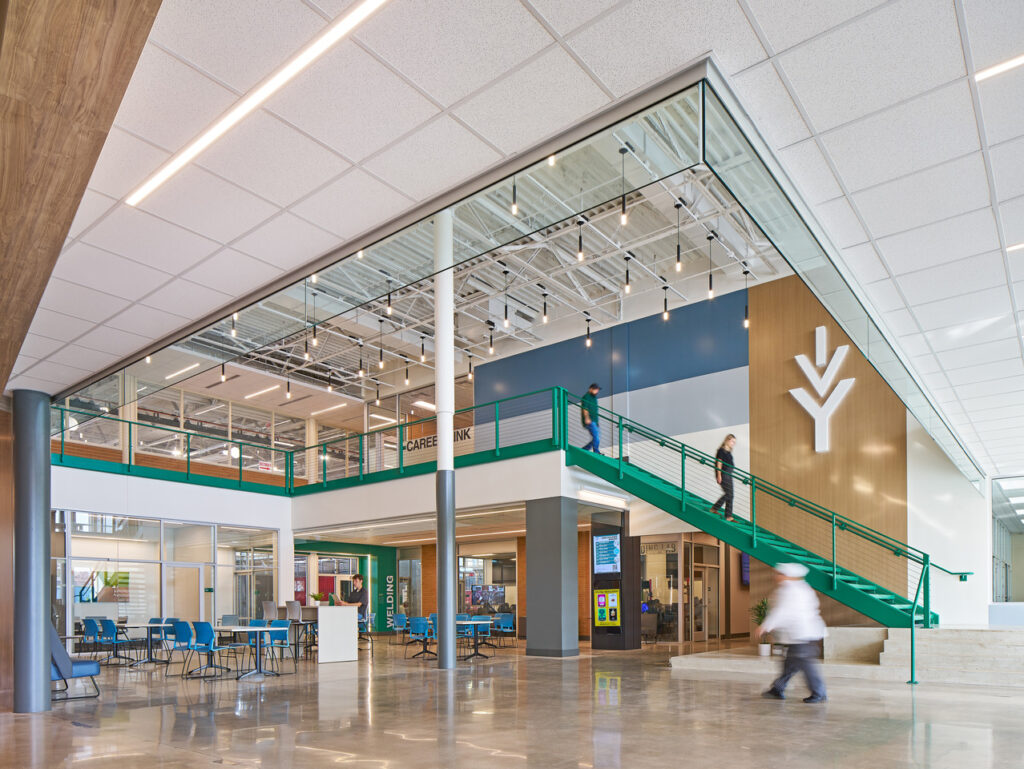
The Lake County campus of Ivy Tech Community College (ITCC) underwent extensive renovations including a reconstruction of the entrance to create a predominate, accessible front entry space that is visible from the street and enhances the building user’s entry experience. The ITCC brand and digital graphics, furniture, and building materials reflect both an industrial and technical aesthetic to create a warm and welcoming lobby. Several of the program entrance “front porches” off the main corridor are included in the design to increase visibility of the programs and provide a space for students to collaborate.
Experiential Spaces Are Winning
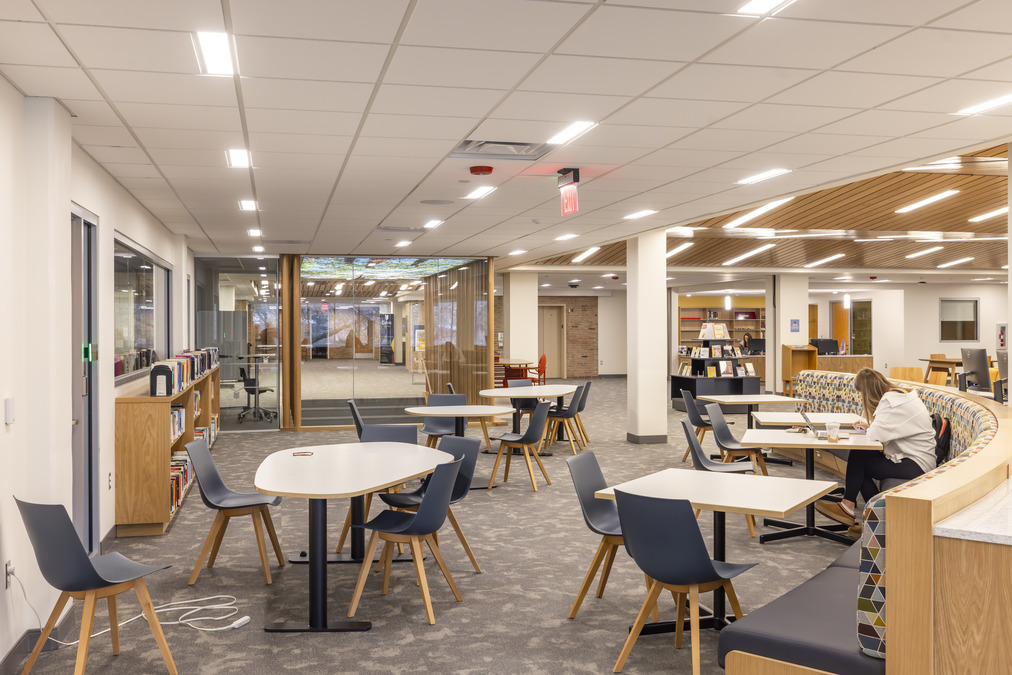
Students today expect spaces that foster collaboration, connection, and real-world preparation. Demand for flexible, experiential learning environments has steadily risen, with institutions seeing improved student engagement and retention rates when those investments are made. By offering unique funding support, like faculty mini grants that brings experiential learning to campus, or providing partnerships and hands-on programs that have application in the immediate community, schools can create impactful opportunities to students across campus.
At Calvin’s Hekman Library Commons interconnected service areas — from student government and multicultural services to career services and even a food pantry — are brought under one roof. A coffee shop and adjacent collaboration space blur the lines between academic and social life, creating an integrated student experience where students can make meaningful connections with different groups of people.
Hybrid-Friendly Design
The pandemic accelerated the shift to flexible learning models that embrace both technology and in-person experiences. Focusing on creating inclusive learning that gives students the flexibility they are looking for, while also preparing them for workplace demands, is key.
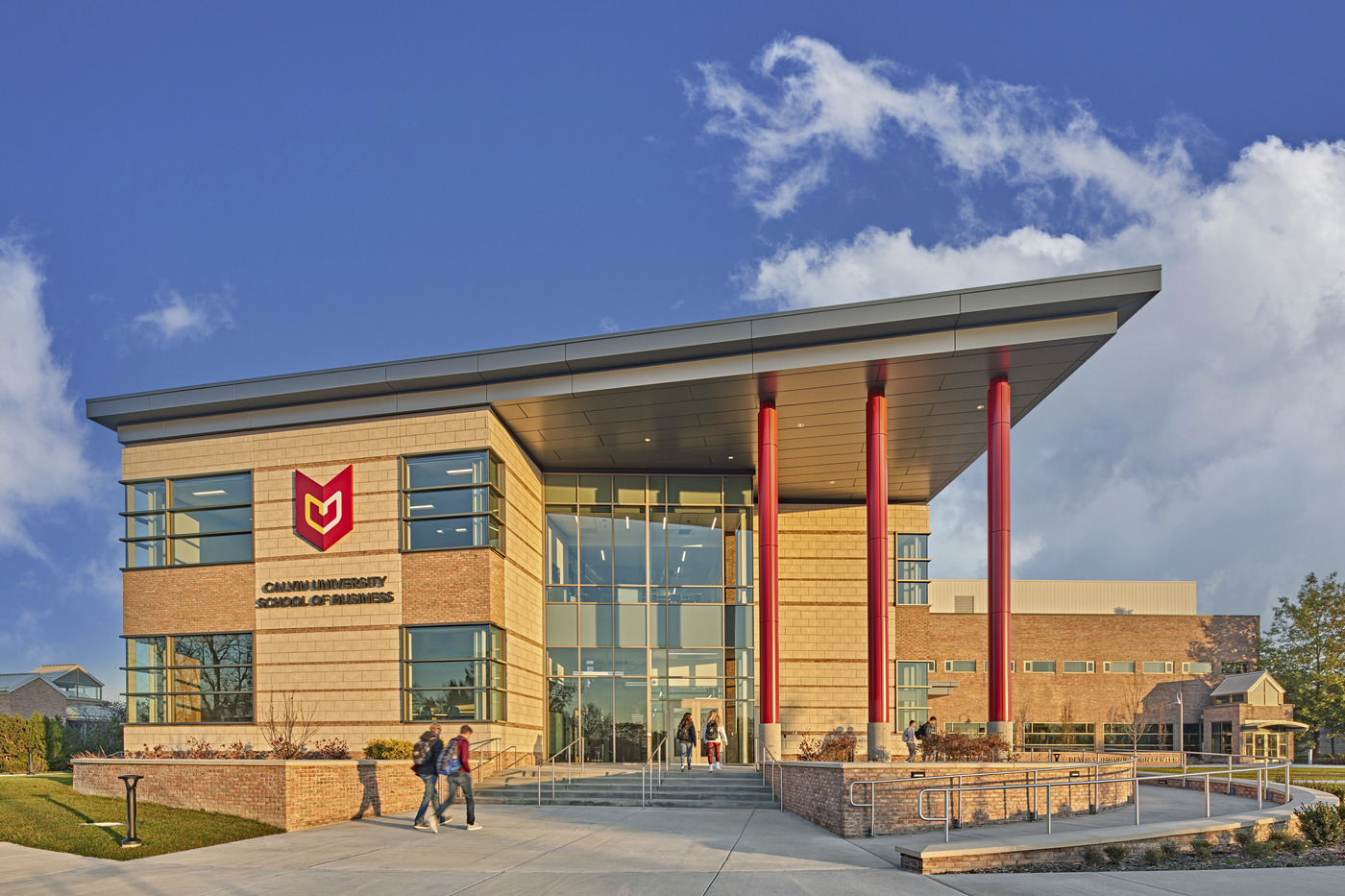
Calvin University’s School of Business integrates flexible classrooms equipped with connected technology that allows for seamless transitions between in-person, hybrid, and remote learning. These spaces support the program’s interactive curriculum while offering accessibility to those who need it and supports students’ choice in how and where they learn. Drawing on the idea of deepening connections, this hub gives students and visitors from all over campus an interconnected space that brings meaning, collaboration, and energy to the area.
Branding Through Architecture
Facilities are also a large branding tool. Architecture that reflects institutional identity not only shapes student and community perceptions but also strengthens recruitment campaigns.
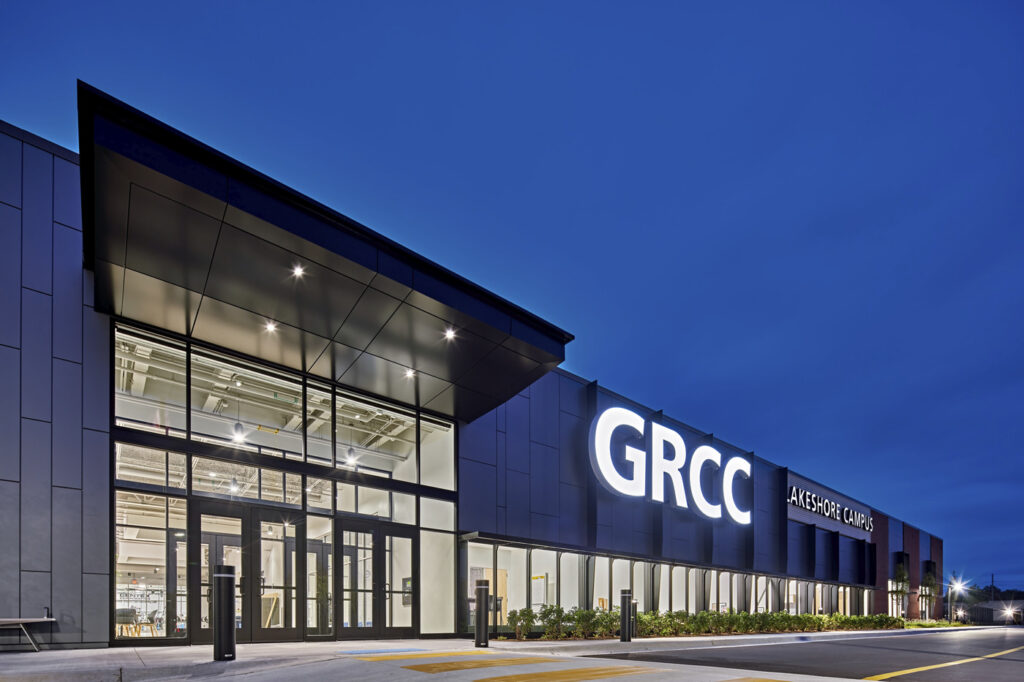
At Grand Rapids Community College (GRCC), design decisions were made to highlight technical learning as visible and transparent. The exterior façade incorporates industrial materials and even a large-scale logo — functioning like a billboard that proudly communicates the college’s values and community role. Research has shown that distinctive campus design can increase a student’s sense of institutional pride and belonging, two factors tied to retention.
Connection to Nature
Outdoor spaces aren’t just amenities — they’re linked to improved student well-being and engagement. In fact, campus green spaces have been recognized as the most important environmental intervention for students’ mental health, as it can provide them with a space to relax and socialize. Colleges that integrate green spaces and biophilic design on campus report higher satisfaction rates among students.
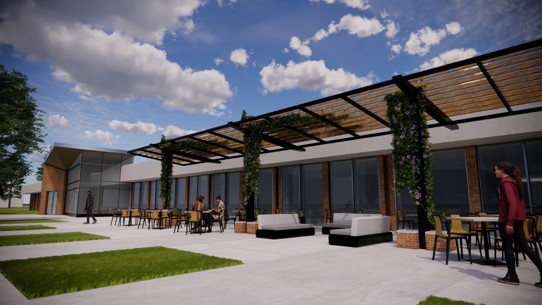
At MCCC, the Warrick Student Center is designed to connect directly with the campus’s main quad, providing access to restorative green space. A patio on the outdoor mall will feature a canopy for shade and pant life, alongside a variety of seating, to draw students to the building. As landscape architect Frederick Law Olmsted once noted, nature offers “refreshing rest and reinvigoration,” and modern research continues to affirm its role in supporting student success.
Why It Matters to GMB
At GMB, we believe that well-designed campuses, buildings, and spaces can equip students for lifelong learning. By continuously learning from our clients and students, designing alongside communities, and generously sharing our expertise, we help create environments that remove barriers, inspire curiosity, and support student success for generations to come.